If you are wondering “what is peer-to-peer fundraising and how realistic is it to let passionate supporters help raise funds?”, you’ve come to the right place. Peer-to-peer (P2P) fundraising is the ultimate strategic glow-up for raising donations. Unlike traditional fundraising models, the organization lets its community take the megaphone to spread the word for its cause.
Yes, you heard us correctly.
With P2P fundraising, your supporters become your biggest mission-builders by expanding your potential to drive donations. In fact, they spin up their own personal fundraising pages and rally their social circles. Sounds fun, right?
If you have donors that are eager to lend a helping hand to your fundraising goals, then this P2P fundraising guide is for you. We’ll explain the ins-and-outs of P2P fundraising, including types of campaigns, peer-to-peer fundraising best practices, and how to use digital tools to make everything run smoothly.
Table of Contents
- What Is Peer-to-Peer Fundraising?
- How Does Peer-to-Peer Fundraising Work?
- P2P vs. Crowdfunding: The Key Differences
- Types of P2P Fundraising Campaigns
- How to Launch a Peer-to-Peer Fundraising Campaign
- Common P2P Challenges (And How to Beat Them)
- Peer-to-Peer Fundraising Best Practices
- Frequently Asked Questions

What Is Peer-to-Peer Fundraising?
Peer-to-peer fundraising (often shortened to P2P fundraising) is a strategy where organizations empower individual supporters to create their own personal fundraising pages and solicit donations from their networks.
In other words, the organization provides the campaign infrastructure, branding, and tools, while participants handle the actual outreach.
Still confused? Don’t be! Think of it like this…
The Potluck Analogy
Peer-to-peer fundraising is like a potluck dinner compared to a catered event. With traditional fundraising, you’re cooking the entire meal yourself. However, with P2P, every guest brings a dish, and suddenly you’ve got a feast that’s bigger, more diverse, and far more personal than anything you could have pulled off solo.
No one can deny that potlucks are amazing and save the host countless hours of meal prep time. The same goes for P2P fundraising!
How Does Peer-to-Peer Fundraising Work?
Here’s how the basic flow works:

Your organization sets up a main donation page with a fundraising goal

Supporters sign up as fundraisers, each receiving a personalized page they can customize with their own story, photos, and donation targets. They then share that page across email, social media, text messages, and good old-fashioned word of mouth.

Every donation funnels back to the central campaign, and everyone can track progress in real time.

Bonus idea:
Check out these peer-to-peer examples to get a better idea of how P2P fundraising works in the real world!
Why Peer-to-Peer Fundraising Works So Well
One of the biggest reasons peer-to-peer fundraising is so effective is because it’s driven by trusted relationships.
People give to people, not logos.
That’s the foundational truth behind every successful peer-to-peer campaign. When someone shares a fundraising page with a personal message explaining why a cause matters to them, it carries weight that no professionally written email blast can match.
If P2P fundraising were a sport, it would be a relay race. No single runner covers the full distance. Instead, each person sprints their leg and passes the baton.
The result? You cover far more ground, far faster, with far less exhaustion for any one participant.
P2P vs. Crowdfunding: The Key Differences
People confuse these two constantly, and honestly, we get it. Both involve raising money online from lots of people. But the mechanics are fundamentally different.
Crowdfunding relies on a single campaign page managed by one entity. You post your project or cause, blast it to the world, and hope it gains traction.
Meanwhile, peer-to-peer fundraising multiplies that effort by creating dozens, hundreds, or even thousands of individual campaign pages, each managed by a different person with their own unique audience.
Let’s break it down a little bit further.
The magic of P2P lies in that personal connection. When your best friend asks you to donate $25 to a cause they care about, you’re far more likely to open your wallet than when an organization you’ve never heard of pops up in your feed.
Benefits of Peer-to-Peer Fundraising for Your Organization
The benefits of peer-to-peer fundraising extend far beyond just collecting donations. Here’s what makes it such a powerful strategy for organizations of every size:
- Exponential reach: Each fundraiser opens a door to an entirely new network your organization has never accessed before
- Lower acquisition costs: Your supporters do the outreach legwork, reducing the marketing spend needed to find new donors
- Built-in storytelling: Personal fundraising pages create authentic narratives that resonate more deeply than organizational messaging
- Community building: Fundraisers become invested advocates, not just one-time supporters
- Data goldmine: You collect contact information for both fundraisers and their donors, growing your database significantly
And the overall sector keeps growing. According to the Peer-to-Peer Professional Forum, the top 30 U.S. peer-to-peer programs generated $1.17 billion in 2025, engaging 2.63 million participants and posting 3.4% revenue growth year-over-year.
This isn’t a trendy tactic! In fact, it’s a proven, scalable revenue channel.
Now that you know what peer-to-peer fundraising is all about, let’s dive into the different types of P2P campaigns.
Three Types of Peer-to-Peer Fundraising
One of the most significant advantages of peer-to-peer fundraising with Cheddar Up is its flexibility. Whether you want to collect flat donations, sell fundraising items, or run an athon, there’s a model to fit your needs.
Flat Donations: The Classic Approach
Flat Donations are a direct form of peer-to-peer fundraising where participants solicit simple, one-time monetary contributions from their personal networks. Unlike sales-based fundraisers, this model focuses on straight contributions rather than exchanging goods or services.
-
How It Works:
Participants ask for one-time donations from their network.
-
Best For:
Schools, sports teams, churches, and community groups.
-
Why It Works:
Simple and effective — no products to sell, just direct contributions.
Example:
A high school band runs a peer-to-peer fundraising campaign to raise money for a trip. Each student gets a custom donation page and shares it with friends and family.

Product Sales: Sell More with Personal Fundraising Stores
Product Sales is a peer-to-peer fundraising model where supporters use personalized online storefronts to sell specific products to their network. Instead of asking for a direct donation, participants provide value through goods, with the proceeds benefiting the organization.
-
How It Works:
Participants receive an online storefront selling fundraising items like t-shirts, popcorn, cakes, or coffee.
-
Best For:
Booster clubs, youth groups, and nonprofits looking to sell products for a cause.
-
Why It Works:
More sellers mean more buyers, leading to higher sales.
Example:
A local lacrosse team uses Cheddar Up, a peer-to-peer fundraising platform, to sell bundt cakes.

Athons: Raise Money for Every Step, Lap, or Book Read
Walk-a-thons, bike-a-thons, dance-a-thons, read-a-thons: if you can stick “-athon” on the end, you can probably build a P2P campaign around it. These events give fundraisers a tangible activity to rally around, making the ask feel less like begging and more like sponsoring a personal challenge.
Event-based campaigns work particularly well for schools, sports teams, and health-focused nonprofits. The event itself creates a deadline, a sense of urgency, and a celebratory atmosphere that motivates both fundraisers and donors.
-
How It Works:
Donors pledge an amount per unit of activity (e.g., per mile walked or per book read).
-
Best For:
Walk-a-thons, read-a-thons, and bike-a-thons.
-
Why It Works:
Donors stay engaged throughout the fundraiser and often give more.
Example:
A school hosts a read-a-thon where students gather pledges for every book they complete. Ultimately, donors are charged based on the student’s reading progress.


Giving Day and Time-Bound Campaigns
These campaigns compress the entire P2P effort into a short window, often 24 to 48 hours. The tight timeline creates urgency and FOMO (fear of missing out, for those who’ve somehow avoided that acronym). GivingTuesday campaigns often use this format to great effect, leveraging the collective energy of a national giving movement.
-
How It Works:
Organizations compress their entire P2P effort to only 2 days.
-
Best For:
Leveraging the collective energy of national giving movements, most notably GivingTuesday campaigns.
-
Why It Works:
The restricted timeline causes a sense of FOMO (fear of missing out) among potential donors. This motivates them to donate sooner than later!
Example:
An organization launches a high-energy 48-hour challenge where every supporter tries to reach a mini-goal before the clock runs out, turning a standard fundraiser into a thrilling event.
How to Launch a Peer-to-Peer Fundraising Campaign
Ready to stop reading and start doing? Here’s your step-by-step P2P fundraising guide, broken down into manageable phases that won’t overwhelm even the busiest volunteer organizer.

1. Define Your Goals and Metrics
Before you build a single page, get crystal clear on what success looks like. Set a specific dollar amount, a target number of fundraisers, and a realistic timeline.
Track these key performance indicators throughout your campaign:
Fundraiser activation rate:
What percentage of sign-ups actually raise money?
Average gift size:
How much does each donor contribute?
New donor acquisition:
How many first-time donors join your database?
Once you have set a fundraising goal, we highly recommend finding a peer-to-peer fundraising platform to manage everything in one place.

2. Choose the Right P2P Fundraising Platform
Your platform is the engine that powers the entire campaign, so choose wisely. When evaluating p2p fundraising platforms, look for these non-negotiable features:
A compelling campaign description:
- Easy-to-create individual fundraising pages with customization options
- Mobile-friendly design (most donors will give from their phones)
- Integrated payment processing with multiple payment methods
- Real-time tracking dashboards for both organizers and fundraisers
- Built-in social sharing tools
- Form collection capabilities for gathering additional participant information
Easy-to-use platforms like Cheddar Up offer peer-to-peer fundraising capabilities purpose-built for community organizations, schools, and clubs.
You can build flat donation campaigns, product sales fundraisers, and athon-style events while managing participants and teams, all without requiring donors to download an app or create an account. That frictionless experience matters more than you might think: every extra step in the donation process is a chance for someone to abandon the page entirely.

3. Create a Main Fundraising Page
Your main Cheddar Up fundraising page is the central hub of your peer-to-peer campaign. It is the first thing donors see, so it needs to be clear, engaging, and inspiring.
Here’s what to include:
A compelling campaign description:
- Explain what you’re raising money for and who will benefit.
- Share a short, emotionally compelling story to connect with potential donors.
- Highlight the impact of donations, making it clear why contributions matter.
A strong visual (banner image or video):
- Choose a high-quality image that represents your cause.
- Include a short video featuring organizers, participants, or beneficiaries if possible.
- Visuals help make your campaign feel more personal and urgent, leading to more engagement.
A donation goal and progress bar:
- Set a clear fundraising target so donors know what you’re working toward.
- Use a progress bar to create urgency and momentum — people love seeing goals get closer!
- A visible goal encourages larger contributions, especially as the campaign nears its target.
A well-designed main page makes it easy for donors to understand the cause, feel inspired, and take action — whether donating directly or supporting a participant.

4. Add Participants
One of the most significant aspects of peer-to-peer fundraising is that it empowers individuals to become fundraisers.
Here’s how to set them up for success:
Encourage participants to customize their page:
- Add a message, photo, or video to make their appeal more compelling.
- A personal touch helps donors feel more connected to the cause.
Let participants set their own fundraising goals:
- Allow them to choose a goal that feels achievable and motivating (e.g., $100, $500, or $5,000).
- Clear goals keep them engaged and encourage donors to help them reach their target.
Turn participants into dedicated advocates:
- Give them the tools to personalize, track, and promote their fundraising pages.
- The more engaged they are, the more successful the campaign will be!
Empowering and equipping participants creates a team of motivated fundraisers to help expand your reach and maximize donations.
5. Activate Fundraising Features
Integrating interactive fundraising tools is essential to keep the energy high and participants engaged. These features help create momentum, encourage friendly competition, and drive more donations.
Leaderboards:
- Showcase top fundraisers in real time to inspire friendly competition.
- Motivate participants to push for higher donation amounts by recognizing their efforts.
Donor Messages:
- Allow supporters to leave words of encouragement as they donate.
- Builds excitement and reinforces the impact of each contribution.
Goal Progress Bar:
- Provides a visual representation of fundraising goals.
- Watching the progress made creates urgency and encourages last-minute donations.
These interactive features keep participants engaged and motivate them to raise more for your cause.

6. Encourage Participants to Share
The success of a peer-to-peer fundraising campaign depends on how well participants promote their fundraising pages. The more they share, the wider their reach and the more donations they collect. Since not all participants will know the best ways to spread the word, providing them with easy-to-use sharing tools and a QR code to their campaign page is key.
Provide Ready-to-Use Email Templates:
- Include a heartfelt message, a direct donation link, and a clear call to action (e.g., “Click here to donate and help me reach my goal!”).
- Pre-written templates make it easy for participants to send personalized donation requests.
Leverage Social Media for Maximum Reach:
- Encourage social media posts by participants on platforms like Facebook and Instagram.
- Suggest sharing:
- Progress updates (e.g., “I’m halfway to my goal—help me get there!”)
- Personal stories and images that connect donors to the cause
- Short videos or live streams discussing their fundraising journey
Make It Easy with Text Message Templates:
- Texting is one of the fastest ways to reach potential donors.
- Provide pre-written text templates participants can quickly send to family and friends.
- A short, direct message with a donation link makes it easy for busy supporters to contribute on the spot.
Equipping participants with the right tools and messaging empowers them to spread the word effectively, leading to higher engagement and increased donations.

7. Track and Celebrate Progress
Keeping a close eye on fundraising progress helps maintain excitement and motivation throughout the campaign. Use Cheddar Up’s real-time dashboard to monitor who’s raising the most, where donations come from, and overall campaign performance. It creates an engaging and rewarding experience that keeps participants and donors invested until the last donation.
Common P2P Challenges (And How to Beat Them)
Let’s be honest: peer-to-peer fundraising isn’t always easy, especially if you have a lot of supporters participating in your campaign. If you’ve spent time reading Reddit threads and Quora discussions from frustrated organizers, you’ve seen the same pain points surface repeatedly.
Here’s a quick breakdown of the most common complaints and how you can address them.
Why Do Supporters Sign Up But Never Raise Anything?
This is the number-one complaint we see in online forums, and it’s a legitimate headache. Someone enthusiastically registers as a fundraiser, sets up their page, and then… radio silence.
The fix? Lower the first hurdle dramatically. Instead of asking fundraisers to “raise $500,” ask them to “share your page with 5 people today.”
Small actions break through the paralysis of a big, abstract goal. Follow up within 24 hours of sign-up with a pre-written message they can copy, paste, and send immediately.
How Do I Run a P2P Campaign With a Tiny Team?
You don’t need a dedicated fundraising department to run a successful peer-to-peer campaign. Rather, you need smart systems and the right tools. Automate everything you can:
- Welcome emails
- Milestone notifications
- Progress updates
- Thank-you messages
Dedicated platforms like Cheddar Up offer multi-administrator access so you can distribute management responsibilities across volunteers without everyone needing to be a tech wizard. Templates for fundraising collection pages eliminate the need to build campaigns from scratch each time, saving hours of setup work.
What About Donor Fatigue and Oversaturation?
If every member of your organization is running a fundraiser simultaneously, donors can feel overwhelmed. Coordinate campaign timing so you’re not flooding the same networks with multiple asks at once. Stagger launches, segment your fundraiser teams by audience, and emphasize quality outreach over sheer volume.
Also, remind your fundraisers that personalization is their superpower. A generic “please donate” link gets scrolled past. A heartfelt message explaining why this cause matters to them personally stops the thumb-scroll every time.
Peer-to-Peer Fundraising Best Practices
First, successful peer-to-peer (P2P) fundraising depends on setting SMART goals that align to your mission’s impact. SMART goals is an acronym that stands for:
- Specific
- Measurable
- Achievable
- Relevant
- Time-bound
Setting SMART goals is important because it provides an actionable roadmap that helps supporters understand exactly what they are working toward and how their specific efforts directly contribute to the mission’s success.
Set Your Supporters Up for Success
Next, rather than just asking for money, organizations should provide supporters with a pre-made fundraising toolkit. This resource should include pre-written email templates, social media scripts, branded images, and a “story bank” of personal anecdotes that fundraisers can customize to resonate with their own networks.
When your process is as frictionless as possible, supporters feel confident and prepared to act as authentic ambassadors for your cause.
Make It Fun
Lastly, to keep momentum high, use gamification and regular communication to celebrate milestones. Implementing leaderboards, digital badges, and “power hours” with matching gift sponsors can spark friendly competition and reignite a campaign during mid-cycle slumps.
Your Peer-to-Peer Fundraising Playbook Starts Now
Peer-to-peer fundraising transforms your supporters from passive donors into active champions.
The organizations seeing the biggest results treat P2P not as a one-off experiment, but as a core part of their fundraising strategy. They invest in their fundraisers, choose platforms that reduce friction, and steward every new relationship that walks through the digital door.
Ready to launch your own peer-to-peer campaign? Cheddar Up makes it easy to build donation campaigns, manage teams, and collect funds, all in one place with no app required for donors. Join a live learning session to see exactly how Cheddar Up works and get your questions answered in real time.
Frequently Asked Questions
What should a peer-to-peer fundraiser’s personal page include to convert more donors?
Include a clear personal reason for supporting the cause, one specific funding outcome, and a direct ask with a suggested gift amount. Add a strong photo, a short update cadence, and a concise thank-you line so donors feel seen immediately after giving.
How can I prevent brand inconsistency across hundreds of individual fundraiser pages?
Provide a set of pre-approved assets such as logos, images, short descriptions, and tone guidelines that fundraisers can copy and paste. Keep customization flexible in a designated section, like a personal story area, while locking the core campaign message and visuals.
How do I handle matching gifts in a peer-to-peer campaign?
Promote matching opportunities with clear parameters, like time window, cap, and what counts as a match, so fundraisers can communicate it accurately. Use platform settings or internal tracking to attribute matched amounts correctly and update progress displays quickly to reinforce urgency.
What is the best way to attribute and report results across teams, captains, and individual fundraisers?
Define attribution rules upfront, including how donations roll up to teams and how offline gifts are recorded. Standardize naming conventions and require key fields at sign-up to keep reporting clean when you export results for leadership, finance, or sponsors.

Before you go
With Cheddar Up, you can empower your group members to rally around a cause, turning individual efforts into a powerful movement. Start your peer-to-peer campaign today and watch your community unite to make a difference!
You may also like:

10 Best PTO and PTA Fundraising Platforms (2026)
This guide is for PTA and PTO leaders comparing fundraising platforms before making a decision.
Picking a fundraising platform should take an afternoon, not a semester. But with dozens of options out there, most PTA and PTO leaders end up doing one of two things: choosing whatever a predecessor used or going with whichever platform they heard about at a conference.
Neither approach is wrong. But if you’re setting up your group for a new year, or switching away from something that’s been driving you (and parents) a little crazy, it helps to have a real comparison.
We reviewed the field of PTA and PTO fundraising companies and narrowed it to the 10 that make sense for PTA and PTO operations. Not generic school software. Not platforms built for large nonprofits. The ones parents and volunteers are using to run fundraisers, collect dues, sell spirit wear, and get paid without chasing anyone down.

PTA Fundraising Letter Templates: Kickoff, Reminder, and Thank-You
Your fundraiser is set. The goal is in place. Now you need families to show up for the campaign. A well-written PTA fundraising letter is what makes that happen.
The templates below are ready to customize. Swap in your school name, your goal, and your dates. Then send.
If you’re still deciding on your fundraiser format, the PTA fundraising ideas guide covers your options from top to bottom. But if you’re already in motion, start here.
The best letters are short, specific, and personal. Families don’t need a history of your PTA. They need to know what you’re raising money for, how much you’re asking for, and where to go to give.

7 Different Types of Fundraisers (With 50+ Proven Examples)
If you’re tired of defaulting to the same bake sale year after year, then it might be time to explore the many types of fundraisers that will help you reach your fundraising goals.
One fundraiser format can’t do everything. Some raise fast cash, others build long-term donor relationships, and a few quietly generate revenue with almost no volunteer hours.
When you understand the different types of fundraisers available to your organization, it opens up dozens of possibilities you’ve probably never considered!
This guide breaks down seven main fundraiser types and pairs each one with proven examples you can adapt to your group’s size, budget, and goals. Ready to get started?Truth bomb: relying on one single type of fundraiser can limit your reach and exhaust your donor base over time.
Whether you’re a group leader in charge of raising funds for your community or a nonprofit organizer building a fundraising plan, it’s no secret that a mix of fundraising strategies can help you build a more resilient and sustainable financial foundation for your organization’s long-term goals.
How Dairyland Donkey Ball Grows Small-Town Fundraisers
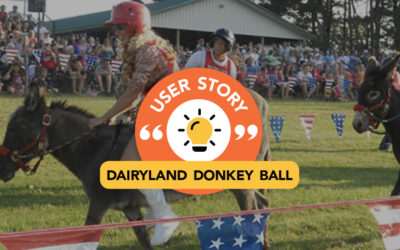
For more than 21 years, Dairyland Donkey Ball has delivered high-energy fundraising events to rural communities across 26 states. From donkey basketball during the school year to summer donkey baseball and celebrity races, their events bring entire towns together.
Most of the communities they serve have fewer than 1,500 residents. Some have fewer than 200. When 10 donkeys arrive, it is not just another event. It is THE event.
Each fundraiser operates as a partnership. A local school group, FFA chapter, or civic organization pays a booking fee and promotes the show. Ticket revenue is split, so strong turnout benefits everyone involved.
With dozens of events happening across multiple states, consistency matters. Every town runs a little differently. Every volunteer team has different experience levels with online tools. And when your business operates on the road, you need a system that works the same way everywhere.
When CJ first discovered Cheddar Up, he saw how smoothly the platform handled dues and registrations. That experience made the decision easier when it came time to modernize ticket sales for Dairyland Donkey Ball.