
Fundraising event planning can feel chaotic! Too many group texts, not enough lead time, and a race to find last-minute volunteers leaves many organizers with a headache. Sound familiar?
Luckily, there are tactics you can use to avoid common planning mistakes. For example, a fundraising event planning template gives your whole team the same starting point and keeps you organized from the get-go.
Whether you’re a first-timer organizing a school fundraiser or a seasoned nonprofit volunteer tackling your fifth annual gala, this guide walks you through planning a fundraising event from locking in your date to wrapping up after the event.
You’ll get a practical checklist and timeline for fundraising event planning, as well as specific guidance on the best fundraising event management platforms that keep everything on track. Let’s get started!

What is Fundraising Event Planning?
Fundraising event planning is the structured process of organizing an event specifically designed to raise money for a cause, organization, or group. It covers everything from setting a fundraising goal and budgeting to promotion, logistics, and post-event follow-up.
For fundraisers, the financial outcome is your primary success metric, which means every single decision filters through one question: Will this help us raise more money?
How Does a Fundraising Event Planning Template Help?
More often than not, an organizer will use a fundraising event planning template to help them manage the chaos without breaking a sweat.
A great template allows your budget categories, task assignments, and deadlines to all live in one shared document, so you can stop relying on memory and group texts to get the job done. Don’t worry, we’ve all been there. But it’s safe to say that group texts are never ideal!
The bottom line? A good template is more than just a checklist. It’s your team’s shared source of truth from the very first planning meeting all the way through the thank-you emails.
Later in this guide, we will give you a free fundraising event planning template and some tips on the best online fundraising tools you can use to organize a spectacular event. But first, let’s talk about the common mistakes that cause chaos for event organizers.
3 Mistakes that Quietly Kill Fundraising Events
In general, there are dozens of small yet preventable event planning mistakes that can happen by accident. However, they all boil down to three core pitfalls. Even the most enthusiastic committees can fall into these traps. Watch out for them!

Unclear goals
Without a specific dollar target tied to a specific purpose, your team can’t prioritize spending or measure success. A vague goal produces a vague result.

Underestimating expenses
Groups routinely forget line items like insurance, gratuity, platform fees, and contingency costs. This is where a budget buffer comes in handy! Build your budget with a 15% buffer so costs don’t eat into your fundraising profits.

No post-event stewardship
If you don’t follow up with donors and attendees, you’re leaving next year’s revenue on the table. Donor retention is cheaper than donor acquisition in fundraising, as it is everywhere else. The more you steward, the higher the chance you will see recurring donations flow in.
So, how do you avoid these mistakes? Just follow the basic steps below, and you’ll be good to go.
Fundraising Event Planning Template: 7 Easy Steps
Before you dive into volunteer recruitment and vendor quotes, there are a few basics you need to have in place first. Don’t worry, none of this requires a fancy background in event management or a professional planning team.
You just need a clear goal, a crew of willing helpers, and a solid budget. Here’s how to do it in seven easy steps.

Pro-tip:
Be sure to download this free fundraising event planning template so you can fill out your own event details as you read along!
Set a Fundraising Goal
Without a goal, every other decision becomes guesswork. Your goal shapes your event type, your ticket price, your sponsorship asks, and your marketing urgency.
So, what does a clear goal look like? Let’s look at a quick example:
“Raise as much as possible” isn’t a goal. There is no clear vision or direction. However, ” Raise $15,000 net to fund new playground equipment” is. Let’s break it down further.
Start by identifying your actual funding need, then work backward. If you need $15,000 net for new playground equipment, and expect 30% of gross revenue to go toward event costs, your gross target is roughly $21,500. You would need to factor in all costs to ensure your target is high enough to reach your goal.
Pro-Tip:
Need help understanding your goals? Check out this guide to learn how to set a fundraising goal that will transform your fundraising event.
Your Event Type to Your Audience
Not every group should host a gala. A 12-person PTA committee doesn’t have the volunteer bandwidth for a 300-guest dinner, and a large nonprofit shouldn’t limit itself to a bake sale.
Your event type should match three things:
- Your audience’s preferences
- Your team’s actual capacity
- Your fundraising target
Here’s a quick comparison to help you find your fit:
Pro-Tip:
Galas raise the most money, but they also carry the highest risk. If your event flops, you’re out thousands in venue and catering deposits. Smaller, lower-overhead events are often the smarter play for groups still building their donor base.
Build Your Budget & Fundraising Event Planning Checklist
Your budget and timeline are the two structural pillars of your fundraising event planning template. Get these right, and everything else becomes much more manageable.
Sample Budget Categories
Most fundraising event budgets underestimate expenses. Here are the categories that frequently get overlooked.
- Venue rental and insurance
- Catering or food/beverage (including service fees and gratuity)
- Entertainment or speaker fees
- Printed materials (signage, programs, bid sheets)
- Technology (AV equipment, payment processing, registration platform)
- Decorations and supplies
- Marketing costs (ads, email platform, graphic design)
- Contingency buffer (10-15% of total budget, non-negotiable)
That contingency buffer matters more than you think. Vendor cancellations, weather-related venue changes, and last-minute supply runs happen at almost every event. Budget for them.
Go-To Fundraising Event Planning Checklist
A checklist that doubles as a timeline is a great way to keep track of your fundraiser’s team and activities. Here’s a quick-reference fundraising event planning checklist.
Print it out, post it in the group chat, or stick it right inside your planning template!
☐ Set your fundraising goal
☐ Choose your event type based on team size and audience
☐ Book your venue and lock in the date
☐ Form your planning committee and assign leads
3–5 Months Out
☐ Launch sponsorship outreach
☐ Recruit volunteers for your fundraising event
☐ Set up your registration and payment system
☐ Finalize your budget (don’t skip the contingency buffer!)
☐ Recruit and assign volunteers
30 Days Out
☐ Confirm all vendors
☐ Send promotional pushes across all your channels
☐ Prepare your day-of run sheet
☐ Brief your volunteer team on their roles
☐ Set up a fundraising goal tracker
1 Week Out
☐ Do a full plan walkthrough
☐ Confirm headcounts and print materials
☐ Test all technology
☐ Assign check-in and troubleshooting roles
Day Of
☐ Follow the run sheet (seriously, follow the run sheet)
☐ Keep one person dedicated to troubleshooting
☐ Check your fundraising goal tracker throughout the day
After the Event
☐ Send thank-you messages within 48 hours
☐ Run final numbers and compare to your goal
☐ Hold a debrief and document what worked (and what didn’t)
Pro-Tip:
Keep this checklist inside your fundraising event planning template so your whole team can reference it in one place, no digging through old emails required.

Market Your Fundraising Event
This is where planning fundraising events gets either painless or chaotic, depending on your tools. Managing a separate registration form, a payment processor, and a spreadsheet tracker introduces errors and eats up volunteer hours that could be spent on something much better.
Event management tools like Cheddar Up help simplify this by combining payment collection, custom forms, and ticket sales into a single collection page.
For example, attendees can register, donate, and submit information (like meal preferences or T-shirt sizes) in one step, with no app download or account creation required.
For organizers, the real-time dashboard tracks payments and RSVPs automatically, which means no more manual data entry or chasing down checks. You can even set up online fundraising alongside your event registration to capture donations from supporters who can’t attend in person.
Pro-Tip:
For groups planning recurring annual events, Cheddar Up’s collection templates let you duplicate a proven setup and tweak the details, turning months of setup work into just a few hours of customization. Now that’s a win!

Market Your Fundraising Event
The best-planned event fails if nobody shows up. Therefore, your marketing plan should kick-off 8 to 10 weeks before the event and pick up speed as the date gets closer.
Here are some quick fundraiser marketing tips:
- Maximize your reach with peer-to-peer marketing: encourage early registrants and board members to share the event with their own networks
- Partner with local influencers or community businesses: cross-promote the event on their digital channels in exchange for a free ticket or a small shout-out
- Create a sense of urgency: an “early bird” registration deadline often jumpstarts ticket sales
Along with marketing, you’ll need to consider how you’re going to manage sign ups.
Manage Registration
Focus on the channels your audience actually uses. For school groups and parent organizations, email and social media typically drive the most registration. For established nonprofits, direct mail to major donors is worth the extra effort.
In every case, keep registration and sign ups as simple as possible: one link, minimal form fields, and instant payment confirmation.

Event Day
All the planning comes down to this. Arrive early, finish setup before doors open, and do a final tech check on your payment processing, check-in tools, and AV. Walk every volunteer through their role and the run sheet, and then the fun begins!
Once the event is running, assign one person to troubleshoot so small problems don’t pull you away from the program. Follow the run sheet for timing and transitions, and monitor your fundraising goal tracker throughout the day. Real-time progress gives your team something to get excited about.
Before you leave, do a quick on-site debrief, collect all materials, thank your volunteers in person, and write down anything that went sideways while it’s fresh.

Event Day
Post-event follow-up is the most neglected phase of fundraising event planning, but it’s arguably the most valuable. What you do in the two weeks after your event determines whether attendees become repeat donors or one-time visitors.
Here’s your post-event game plan:
First, send donor acknowledgement thank-you messages within 48 hours. Personalize them where you can, especially for sponsors and major donors. A generic “thanks for coming!” email is better than nothing, but a specific note referencing someone’s contribution builds lasting relationships.
Next, run the numbers. Compare your actual revenue against your goal, break down expenses by category, and calculate your true net. A strong nonprofit fundraising plan integrates these post-event insights into next year’s strategy so you’re not starting from scratch every time.
Finally, hold a brief recap with your committee. Document what worked, what didn’t, and what you’d change. These notes are worth more than any planning guide because they reflect your specific community and context!
Make Planning Fundraising Events Easier than Ever!
Planning a fundraising event doesn’t require professional experience. All you need is a clear goal, a realistic timeline, and a platform that keeps your team aligned. The fundraising event planning template above covers every phase from initial goal-setting through post-event analysis, and it works whether you’re organizing a school walkathon or a nonprofit gala.
If you want to eliminate the spreadsheet juggling and give your team one place to manage registrations, payments, and communications, Cheddar Up is built specifically for groups like yours.
Join a live learning session to see how organizers set up their fundraising event collections in minutes, or sign up free and start building your first collection today.
Frequently Asked Questions
How many volunteers do I need for my fundraising event?
Start by filling five key roles: event lead, finance lead, sponsorship lead, marketing lead, and logistics lead. From there, build out day-of positions like check-in, sales support, and runner. Locking in clear ownership early prevents last-minute gaps and reduces decision bottlenecks when things get hectic.
Should I include sponsorships in my fundraising event planning?
Yes! Event sponsorships are a win-win. For your organization, they offset overhead costs, meaning more of your ticket sales and donations go directly to your cause. For the sponsor, it’s a chance to get their brand in front of an engaged audience and show off their philanthropic side.
Start with mission-aligned local businesses, vendors, and service providers that already benefit from your community. Then put together a simple one-page sponsorship package that shows your audience reach and the perks sponsors will receive. A warm intro from a board member, parent, or volunteer almost always outperforms cold outreach.
How do I plan for event attendance, especially if ticket sales are slow?
First, create urgency with a deadline-driven offer like early-bird pricing, limited seats, or a bonus perk. Then, activate personal outreach from committee members to your most likely attendees. Pair this with a simple referral ask so current registrants bring a friend.
What are best practices for collecting attendee information without hurting conversions?
Collect only what you truly need at checkout. Use a follow-up form for optional details like dietary restrictions or seating preferences. If you need more fields upfront, make them conditional so most guests see a shorter form.
How do I handle donor privacy and permission for future outreach?
Use explicit opt-in language for email and text communications, and document consent in your contact records. If you share sponsor lists or publish donor names publicly, provide a clear way for supporters to remain anonymous.

Before You Go
Ready to plan the ultimate fundraiser event for your community or nonprofit organization? Cheddar Up can level up your event! Join a Cheddar Up Live Session for Q&A with product experts, or watch this demo.
You may also like:

7 Different Types of Fundraisers (With 50+ Proven Examples)
If you’re tired of defaulting to the same bake sale year after year, then it might be time to explore the many types of fundraisers that will help you reach your fundraising goals.
One fundraiser format can’t do everything. Some raise fast cash, others build long-term donor relationships, and a few quietly generate revenue with almost no volunteer hours.
When you understand the different types of fundraisers available to your organization, it opens up dozens of possibilities you’ve probably never considered!
This guide breaks down seven main fundraiser types and pairs each one with proven examples you can adapt to your group’s size, budget, and goals. Ready to get started?Truth bomb: relying on one single type of fundraiser can limit your reach and exhaust your donor base over time.
Whether you’re a group leader in charge of raising funds for your community or a nonprofit organizer building a fundraising plan, it’s no secret that a mix of fundraising strategies can help you build a more resilient and sustainable financial foundation for your organization’s long-term goals.
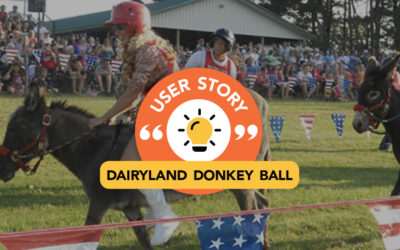
How Dairyland Donkey Ball Grows Small-Town Fundraisers
For more than 21 years, Dairyland Donkey Ball has delivered high-energy fundraising events to rural communities across 26 states. From donkey basketball during the school year to summer donkey baseball and celebrity races, their events bring entire towns together.
Most of the communities they serve have fewer than 1,500 residents. Some have fewer than 200. When 10 donkeys arrive, it is not just another event. It is THE event.
Each fundraiser operates as a partnership. A local school group, FFA chapter, or civic organization pays a booking fee and promotes the show. Ticket revenue is split, so strong turnout benefits everyone involved.
With dozens of events happening across multiple states, consistency matters. Every town runs a little differently. Every volunteer team has different experience levels with online tools. And when your business operates on the road, you need a system that works the same way everywhere.
When CJ first discovered Cheddar Up, he saw how smoothly the platform handled dues and registrations. That experience made the decision easier when it came time to modernize ticket sales for Dairyland Donkey Ball.

Fundraising Strategy: Top Fundraiser Planning & Tracking Tips
Picture this: Instead of scrambling for last-minute donations, your team is coasting past its financial goals all thanks to a rock-solid fundraising strategy. Sounds like a dream, right?
Luckily, this dream can become a reality if you know how to create a fundraiser strategy for your group or nonprofit.
Whether you’ve been tasked to raise some quick funds for your child’s youth sports team or you’re part of a large nonprofit that needs to develop a long-term fundraising plan for a big building renovation, it all boils down to this:
A well-thought-out strategy is your best bet for success!
So, how do organizers and community leaders like you create a fundraising strategy? Great question.
This beginner-friendly fundraiser planning guide walks you through every step of building a bulletproof strategy that actually works. You’ll learn how to assess where you stand, set realistic goals, choose the right campaigns, and pick easy-to-use fundraising tools that save hours of volunteer time.
By the end, you’ll have a repeatable system you can adapt season after season.

Fall Activities for Preschoolers: 20+ Classroom and Outdoor Ideas for Ages 3–5
Fall is one of the easiest seasons to make exciting for preschoolers. The colors, the textures, the smells. But if you are a teacher building out a fall lesson plan or a parent trying to fill a few October afternoons, the challenge is finding fall activities for preschoolers that are achievable for ages 3 to 5.
Preschoolers do not need elaborate activities. They need interesting materials, a little space, and permission to explore. Everything on this list is designed with that in mind.
Classroom autumn and fall activities work best when they tie into something kids are already learning. Counting, sorting, color recognition, and fine motor skills all have natural fall connections. Here are seven ideas that pull double duty as both fun and educational.
Tags: