
Need to Know
Need a quick starting point? Use this ready-made membership form template and customize it for your group:
A membership form template may seem like a simple operational detail, but it has a much bigger role than most organizations realize. It is often the first real interaction a potential member has with your club, nonprofit, or community group. It sets expectations, collects critical information, and often handles payment at the exact moment someone decides whether to join.
That means your form is not just a form. It is part of your member experience, your registration workflow, and your pricing strategy.
In this guide, you’ll learn how to create a membership form template and customize it to fit your organization. You’ll also explore a sample membership form template you can use as a starting point, along with a clear comparison of form builders to help you choose the right setup.
By the end, you’ll have a simple, repeatable way to turn sign ups into organized, paid memberships, without adding unnecessary complexity to your process.
Table of Contents
- What Is a Membership Form Template?
- Create an Effective Club Membership Form
- Sample Membership Form Template
- Common Mistakes That Make Registration Harder
- Key Differences Between Online Form Builders
- Why Your Membership Form Template Matters
- Manage Club Memberships Using Online Forms
- Frequently Asked Questions

What is a Membership Form Template?
A membership form template is a pre-built structure you can use to collect member information, present membership options, and guide people through registration. Instead of building every form from scratch, you start with an already organized format and then customize it to fit your club, organization, or program.
It sounds simple, but the right template saves time, reduces errors, and creates a smoother experience for your members.
When your membership form template also connects to payment collection and reporting, it becomes much more useful. It does not just gather responses. It supports the entire membership process in one place.
How to Create an Effective Club Membership Form
An effective club membership form is clear, focused, and easy to complete. It gives people the information they need, asks only for what matters, and removes anything that slows down the process.
Focus on clarity over complexity
The goal is to make the path to joining feel simple and obvious. Every field should have a purpose, and every step should move someone closer to completing their registration.
Match your form to your operations
Your form should reflect how your organization actually works. If you offer multiple membership tiers, events, or add-ons, your form should present those options in a way that feels easy to understand and select.
Guide people from interest to commitment
A strong form acts like a guided experience. It helps someone move from interest to sign-up without confusion or hesitation.
Keep the experience frictionless
The fewer decisions and distractions along the way, the more likely someone is to complete the form. Clear language, simple structure, and a smooth payment step all make a difference.
At the end of the day, what makes a form effective is not how much it includes. It is how easily it helps someone take action.
Sample Membership Form Template (Real Example + How to Use It)
Seeing a real example makes everything click. Instead of building from scratch, you can start with a ready-to-go structure and tweak it to fit your group.
Here’s are sample membership form templates you can explore and use:


How to use these sample membership form template
Think of this sample membership form template as a working model. Each section is designed to guide members smoothly from sign up to payment.

Start with the important details
Begin by clearly outlining what the membership form includes and what members can expect during registration. This helps set expectations and makes the process feel straightforward from the start.

Clearly present membership options
This is where decisions happen. Make each option easy to compare and clearly explain what is included.

Use optional add-ons to increase value
Add-ons like events, merchandise, or donations can increase value when they are presented clearly.

Collect only meaningful additional information
Only ask for information you will actually use. This keeps the form focused and easier to complete.

Include agreements and waivers
Waivers and terms should be part of the flow, not a separate action item at a later time.

Make payment feel like a final confirmation
Payment should feel like the natural final step. Clear totals and clear selections help build confidence.
Common Mistakes That Make Membership Registration Harder Than It Should Be
Asking for too much information upfront is one of the fastest ways to lose sign-ups. While it may seem helpful to gather everything at once, longer forms often lead to lower completion rates.
Disconnected tools can also create unnecessary friction. If your form and payment process live in separate apps, it often leads to drop-off before completion or missed payments altogether. Keeping everything in one place helps ensure members can move from registration to payment without interruption.
Mobile experience is another area that often gets overlooked. Many people will complete your form on their phones, so it needs to be easy to read, easy to navigate, and quick to complete.
What Are the Key Differences Between Online Form Builders for Membership Registration?
At this point, you might be wondering which tool actually makes the most sense for your membership form.
Not all form builders are designed with memberships in mind. The key difference comes down to how much of the membership process the platform can support, from sign-up to payment to ongoing management.
Compare Online Form Builders for Membership Registration
The takeaway is simple. The more your tools are split apart, the more effort it takes to keep everything aligned.
All-in-one platforms bring your entire membership workflow into a single experience, which is why they are often the better choice for organizations looking for reliable membership management software.
Cheddar Up allows organizations to create customizable collection pages that handle registration, payments, and information in one place. Built-in communication and reporting tools make it easier to stay organized as your membership grows.
It’s not just about how the form looks. It’s about how much of your membership process the platform can support behind the scenes.
Why Your Membership Form Template Matters for Pricing Strategy
Your membership form is where pricing decisions actually happen.
You can spend time refining your tiers and pricing structure, but if those options are not presented clearly at the point of sign up, it becomes harder for members to choose with confidence.
This is why your form and your pricing strategy need to work together. The structure of your form should reflect how you want members to evaluate choices, whether that’s comparing tiers side by side, selecting a default option, or adding upgrades.
When your pricing strategy is clear and your form presents it well, the decision process feels straightforward. And that is what ultimately drives more completed memberships.

Pro-Tip:
If you’re still refining your approach, this ultimate guide to membership pricing strategy walks you through building, testing, and optimizing your pricing model.
Manage Club Memberships Using Online Forms
Once your membership form template is set up, the next step is handling everything that follows a new registration. Managing club memberships with online forms works best when your form is part of a connected system rather than a one-time data-collection tool.
Start by collecting member information and payment in the same flow. This ensures that every registration is complete and directly tied to a transaction, so nothing gets missed.
Tracking then becomes much more straightforward. You can quickly see who joined, who paid, and who may need a follow-up without checking multiple systems. Beyond just keeping a list of names, accurate tracking is a cornerstone of professional financial management, ensuring your organization remains transparent and accountable to its members.
Communication is the final piece. With everything in one place, sending reminders, updates, and membership renewal letters becomes part of your regular workflow instead of a separate task.
A well-built membership form template supports the entire membership lifecycle, from registration through ongoing management.
Pro-Tip:
If you’re looking for ways to streamline dues collection, this guide on collecting membership dues and fees online breaks down how to simplify the process from start to finish.
Frequently Asked Questions
What should be included in a membership form template?
A membership form template should include contact information, membership options, relevant questions, agreements, and, if needed, payment information. It should also be structured in a clear order so members can move from sign up to payment without confusion.
How do I manage club memberships using online forms?
Use a system that connects forms, payments, tracking, and communication so everything stays organized in one place. This makes it easier to monitor registrations, track payments, and send updates without switching between tools.
How can I customize a membership form template for my fitness club?
Add goal-based questions, scheduling preferences, waivers, and flexible payment options that reflect how your club operates. This helps create a more personalized experience and reduces follow-up after sign-up.
What are the recommended tools for designing nonprofit club forms?
All-in-one platforms, like Cheddar Up, work best because they combine registration, payments, and communication into a single system. This allows nonprofits to manage members, donations, and events without relying on multiple tools.
Should a membership form include payment?
Yes, if you collect dues during registration. Keeping payments in the same flow streamlines the process and reduces the risk of incomplete sign ups.

Before You Go
A well-designed membership form template makes joining simple and helps you stay organized as your community grows. With Cheddar Up, you can bring your form, payments, and member tracking together in one place. Watch a three-minute demo or join a live session to see how it works for your group.
You may also like:
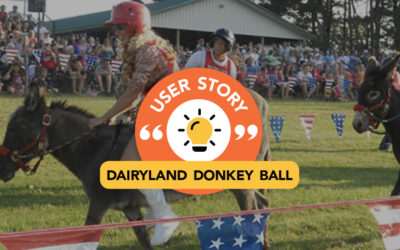
How Dairyland Donkey Ball Grows Small-Town Fundraisers
For more than 21 years, Dairyland Donkey Ball has delivered high-energy fundraising events to rural communities across 26 states. From donkey basketball during the school year to summer donkey baseball and celebrity races, their events bring entire towns together.
Most of the communities they serve have fewer than 1,500 residents. Some have fewer than 200. When 10 donkeys arrive, it is not just another event. It is THE event.
Each fundraiser operates as a partnership. A local school group, FFA chapter, or civic organization pays a booking fee and promotes the show. Ticket revenue is split, so strong turnout benefits everyone involved.
With dozens of events happening across multiple states, consistency matters. Every town runs a little differently. Every volunteer team has different experience levels with online tools. And when your business operates on the road, you need a system that works the same way everywhere.
When CJ first discovered Cheddar Up, he saw how smoothly the platform handled dues and registrations. That experience made the decision easier when it came time to modernize ticket sales for Dairyland Donkey Ball.

The Best Fundraising Event Planning Guide + Template
Fundraising event planning can feel chaotic! Too many group texts, not enough lead time, and a race to find last-minute volunteers leaves many organizers with a headache. Sound familiar?
Luckily, there are tactics you can use to avoid common planning mistakes. For example, a fundraising event planning template gives your whole team the same starting point and keeps you organized from the get-go.
Whether you’re a first-timer organizing a school fundraiser or a seasoned nonprofit volunteer tackling your fifth annual gala, this guide walks you through planning a fundraising event from locking in your date to wrapping up after the event.
You’ll get a practical checklist and timeline for fundraising event planning, as well as specific guidance on the best fundraising event management platforms that keep everything on track. Let’s get started!

10 Cheer Fundraising Ideas Your Squad Will Be Excited About
In 2026, cheer fundraising ideas have become more creative, more community-driven, and a whole lot more fun. Today’s teams are finding new ways to raise money, build anticipation for the season, bring families together, and give athletes a bigger role in reaching team goals.
This guide covers 10 cheer fundraising ideas your squad will really get excited about, plus simple tips to help you raise more while making every fundraiser easier to manage.
Cheerleading is a competitive sport that demands time, talent, and real financial investment from families and programs alike. A well-run cheer fundraiser can cover competition entry fees, travel and hotel costs, new uniforms or accessories, summer camp tuition, and end-of-season celebrations.
The key is choosing cheer fundraiser ideas that match your team’s energy, your community’s interests, and your capacity to organize them well.

The Ultimate Guide to Field Day Activities (for Every Age and Group)
Nobody forgets a great field day. The sunburned cheeks, the kid who took the egg-and-spoon race way too seriously, the team that somehow won tug of war three years running. It’s one of those events that doesn’t need much to be memorable. Just the right activities and enough space to run around.
Planning a school field day, a family reunion, a neighborhood block party, or a community fundraiser? This list is all you need. We’ve organized the best field day activities by audience so you can build a lineup that fits your crowd.
Already thinking about logistics? Check out our complete guide on how to plan a field day from start to finish: it covers everything from budgeting and registration to collecting fees stress-free.
Tags: